Trend Analysis & Market Strategy
For nearly two decades, I evaluated emerging cultural trends and advised authors on positioning their work within evolving markets. This required identifying weak signals early, understanding audience behavior, and making strategic bets under uncertainty. That experience informs how I approach AI systems today: assessing new capabilities, anticipating user behavior, and designing for long-term adoption rather than short-term novelty.
Editorial Development & User Empathy
I worked closely with authors through iterative editorial processes to refine structure, pacing, and voice. That work required balancing creative vision with audience expectations and market realities. It developed a discipline I rely on in AI system design today: shaping ambiguous inputs into structured outputs while preserving intent, nuance, and clarity.
Cross-Functional Leadership
Bringing a book to market required coordinating editors, designers, publicists, legal teams, and international partners around a shared vision and timeline. I was often the connective tissue between creative and commercial stakeholders. That experience directly informs my current work aligning engineers, product teams, and clients around the deployment of complex AI systems.
Strategic Positioning & Communication
Selling a complex manuscript required distilling hundreds of pages into a focused, persuasive pitch tailored to a specific editor’s priorities. That discipline, understanding your audience, clarifying value, and anticipating objections, translates directly to AI work, where success often depends on making sophisticated systems legible and compelling to non-technical stakeholders.
Pitch Letters
Strategic Objective: Distill an epic, multi-century narrative exploring the intersection of chemistry and mythology into an accessible, character-driven pitch for mainstream literary editors.
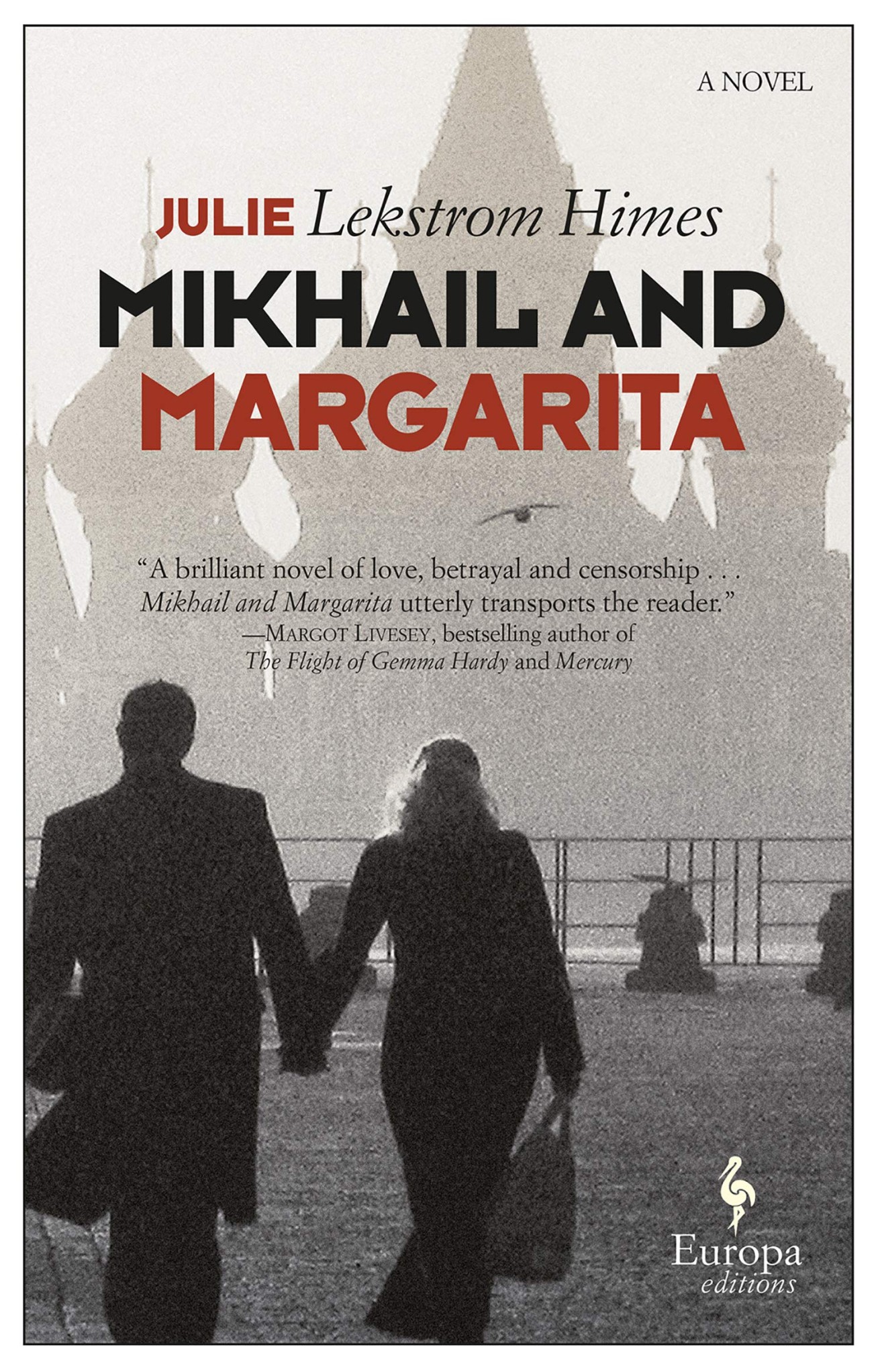
I’m thrilled to share with you Jake Wolff’s warmhearted, gorgeously written, and endlessly entertaining debut novel, The History of Living Forever.
The sudden death of Sammy Tampari, a small town chemistry teacher, shocks no one more than his best student, Conrad, who secretly had been having an affair with him all summer long. Conrad is no stranger to grief, having lost more than most people, but his love for Sammy seemed to eclipse everything else in the way that only blinding first love can. Now Sammy is gone, but when Conrad learns that he sent him his journals right before his death, along with a mysterious recipe book, his pain turns to fascination in the twisting, quixotic life of the man he only thought he knew.
Sammy had traveled the world researching the chemistry of ancient medicine, tribal healers, and local folklore. But deep down, he was looking for something most would call crazy: the elixir of life. He was consumed by his obsession, growing more and more self-destructive. While Conrad unravels Sammy’s story, he weaves in his own life, along with an expanding cast of characters ranging from Chinese herbalists in 300 AD, to 20th century Romanian dictators, supercentenarians, opportunists and dreamers, the deluded and the brilliant, all beckoning Conrad to follow in their footsteps as he tries to find meaning in Sammy’s death and save his own father’s life. Epic in its scope, yet always feeling intimate, The History of Living Forever is about the things we put our faith in to give us just a bit of control in a chaotic world, whether that’s science, or alchemy, or ultimately love.
Jake Wolff's stories and essays have appeared in journals such as Tin House, One Story, and American Short Fiction. He holds an MFA in creative writing from the University of Wisconsin-Madison and a PhD in creative writing from Florida State University. He lives in Oneonta, New York, where he is an Assistant Professor of English at Hartwick College.
The History of Living Forever reminds me of a time when philosophy, poetry, and science were all part of the same strange, beautiful whole, and marks the arrival of an immensely talented new voice. I hope you feel the same, and I look forward to hearing from you.
Best,
Adam Schear
Strategic Objective: Position a high-concept sci-fi novel by subverting traditional genre tropes, highlighting the commercial appeal of its unique world-building to secure a competitive acquisition.
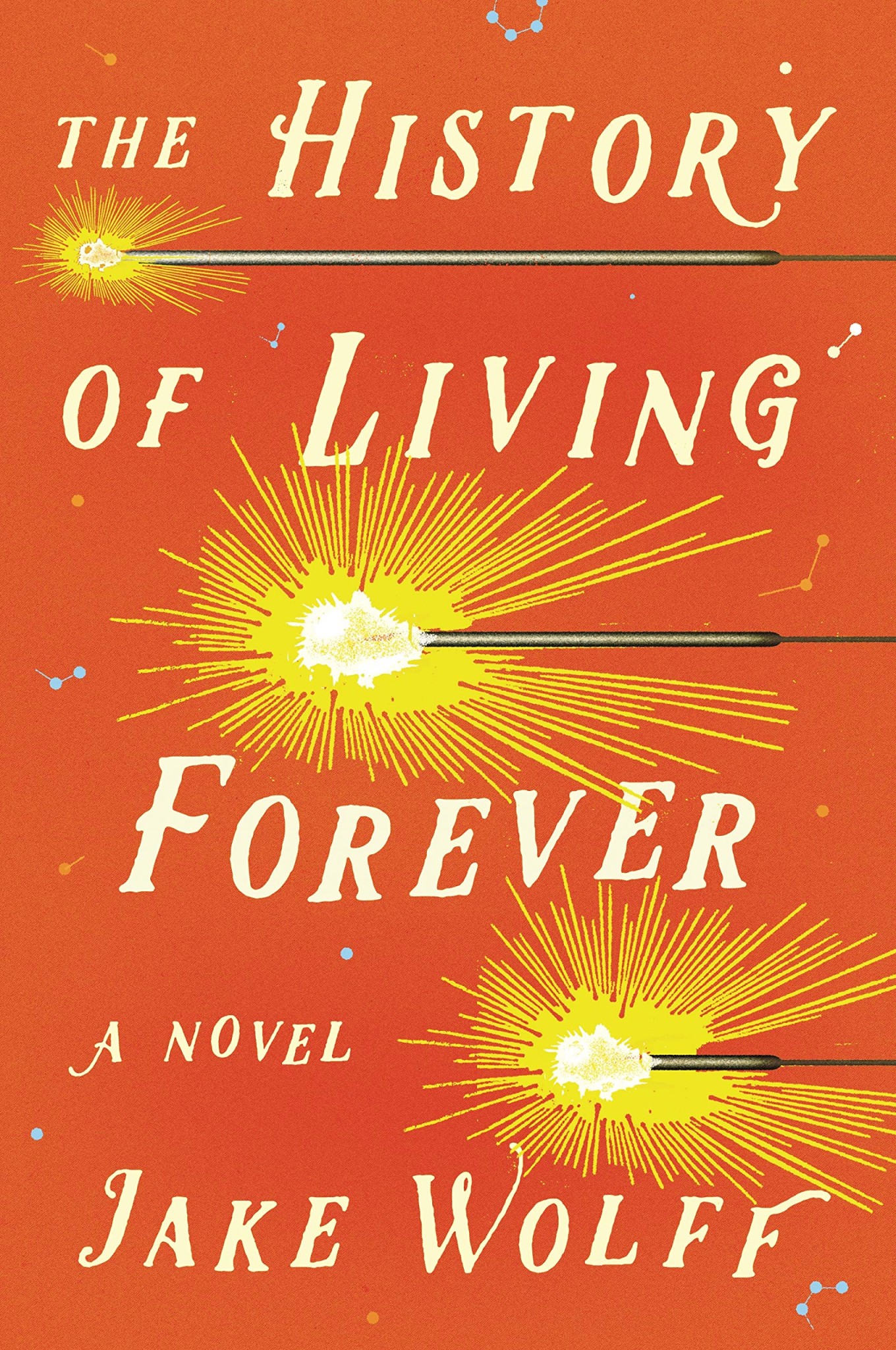
I’m so pleased to send you Adrianne Finlay’s YA debut Your One and Only, about the only human in a world populated by 9 clone models and the girl who falls in love with him.
Jack is a walking fossil, a relic of the past. It’s been hundreds of years since humanity died off in the slow plague, and over time the clones have repopulated, altering and perfecting their genes, heightening the telepathic bond they share. But if they're perfect, why did they create Jack, and what exactly do they want from him?
While Jack longs for acceptance, Althea-310 struggles with the feeling that she's different than her clone sisters - a dangerous idea when they all share thoughts and emotions. Her fascination with Jack doesn’t help, and if her telepathic bond with her sisters fractures, the consequences could be deadly.
When the town is rocked by a series of attacks, Jack is the first and only suspect, but appearances can be deceiving. The truth might have to do with why he was created in the first place, or with a mysterious journal and letter he finds that ends with a phrase no clone would ever use: “your one and only.”
Channeling everything from Never Let Me Go to Orphan Black, but flipping the expected clone story on its head, Your One and Only is a gripping story of discovering what sets you apart, and then fighting to protect it. But when everyone looks the same, knowing who can be trusted is anything but simple.
Adrianne Finlay is the Director of the creative writing program at Upper Iowa University where she teaches English, creative writing and a course on adolescent literature. She received her Ph.D. in English from Binghamton University. Her writing has appeared in Paterson Literary Review, North American Review, The Journal of Popular Culture, and New Linear Perspectives. I hope you're as excited about this wonderful novel as I am and I look forward to hearing from you.
Best,
Adam Schear
Strategic Objective: Translate a highly technical neuroscience manuscript written by an academic researcher into a commercially viable, intellectually rigorous literary novel.
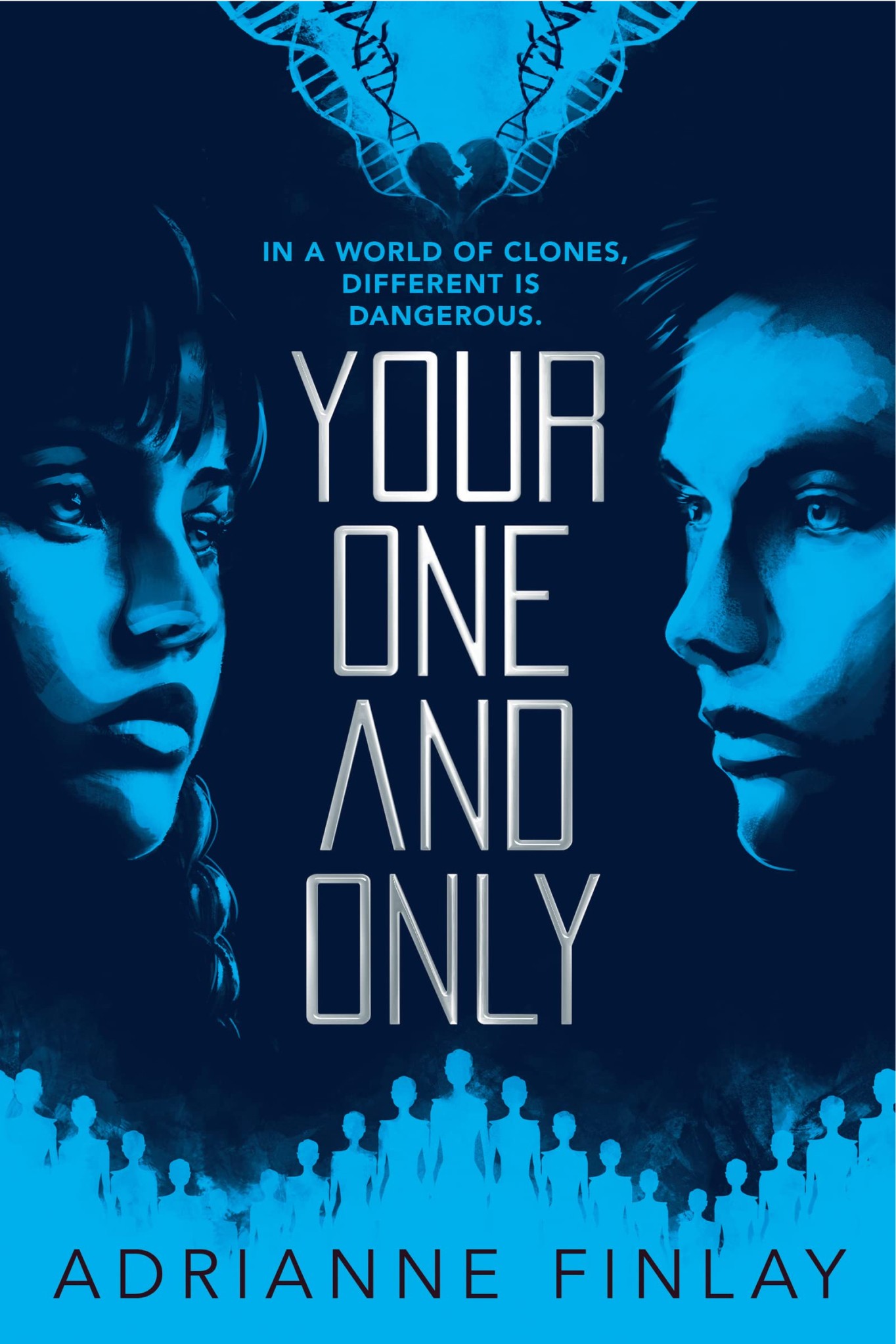
I’m so excited to share with you Erik Hoel’s tremendously ambitious, polymathic debut novel, The Revelations. Hoel possesses a unique set of talents. He was one of the 2018 Forbes 30 under 30 for his neuroscientific research on consciousness and one of the 2017 Center for Fiction’s Emerging Writer Fellows. He grew up in The Jabberwocky, an independent bookstore in Massachusetts that his family owns, and he went on to get his PhD in neuroscience. The Revelations combines all of these sides of Hoel into a novel that only he could write – a powerful look at cutting-edge science, at consciousness and human connection, where the big ideas are met with gorgeous prose.
To Kierk Suren, some ideas are like pitcher plants, the kind that ants slide into and get consumed by. The idea consuming him is nothing less than a scientific theory of consciousness, and the search for it has nearly broken him. Less than a year ago, he was a rising star in neuroscience, but now Kierk is homeless, desperately trying to find a new direction in life. When he hits rock bottom the same week that he’s offered a spot in a prestigious postdoctoral program he decides to rejoin society and to do his best not to self-destruct again. But instead of his research, he’s drawn to another mystery – the suspicious death of a colleague. As his investigation brings him closer to Carmen Green, another postdoc, their list of suspects grows along with the sense that something sinister is happening all around them.
Just like its main character, The Revelations is ambitious and abrasive, challenging and disarming. And like Kierk, the novel is bursting with ideas, ranging from Greek mythology to the dark realities of animal testing, from the romantic subtext in the letters written between Descartes and the brilliant Princess Elisabeth of Bohemia, to some of the biggest unanswered questions facing scientists today. Hoel draws extensively from his experience. All of the strangest details are based on real science, everything from stem cell brains grown in vats, to macaque monkeys with permanent holes installed in their skulls, to the “god helmet” – a real device that recreates religious experiences. Combining elements of a literary mystery, gothic horror, and modern love story into something entirely new, The Revelations is ultimately about how we orient ourselves to the unknown. It’s about life on the edge of a pitcher plant, about those individuals whose ideas might change the world, and the duty they feel to see that through, even when it could cost them everything.
In addition to the biographic details above, Erik Hoel is currently a research assistant professor at Tufts University. Before that, he was a postdoctoral researcher at Columbia University in the NeuroTechnology Lab, as well as a visiting scholar at The Institute for Advanced Study in Princeton. He co-founded YHouse, Inc., a NYC-based non-profit that promotes events bridging science and the humanities and has been a regular onstage at places like The Caveat Center, the Rubin Museum, and the Center for Fiction. His writing has appeared in The Atlantic, The Baffler, and The Daily Beast, among others, and his research has been featured in Wired, Quanta, and Nautilus. He’s already gathering praise from other writers and scientists. I’ve included a few blurbs below, as well as some kind words from other big-name fans of his that are likely to blurb the book when the time comes. That list is sure to grow.
I think you’ll agree that The Revelations is a unique novel. I hope you are as taken with it as I was and I look forward to hearing from you.
Best,
Adam Schear
Strategic Objective: Navigate highly sensitive subject matter by strategically shifting the narrative focus from tragedy to healing, delivering a pitch anchored in profound empathy and psychological nuance.
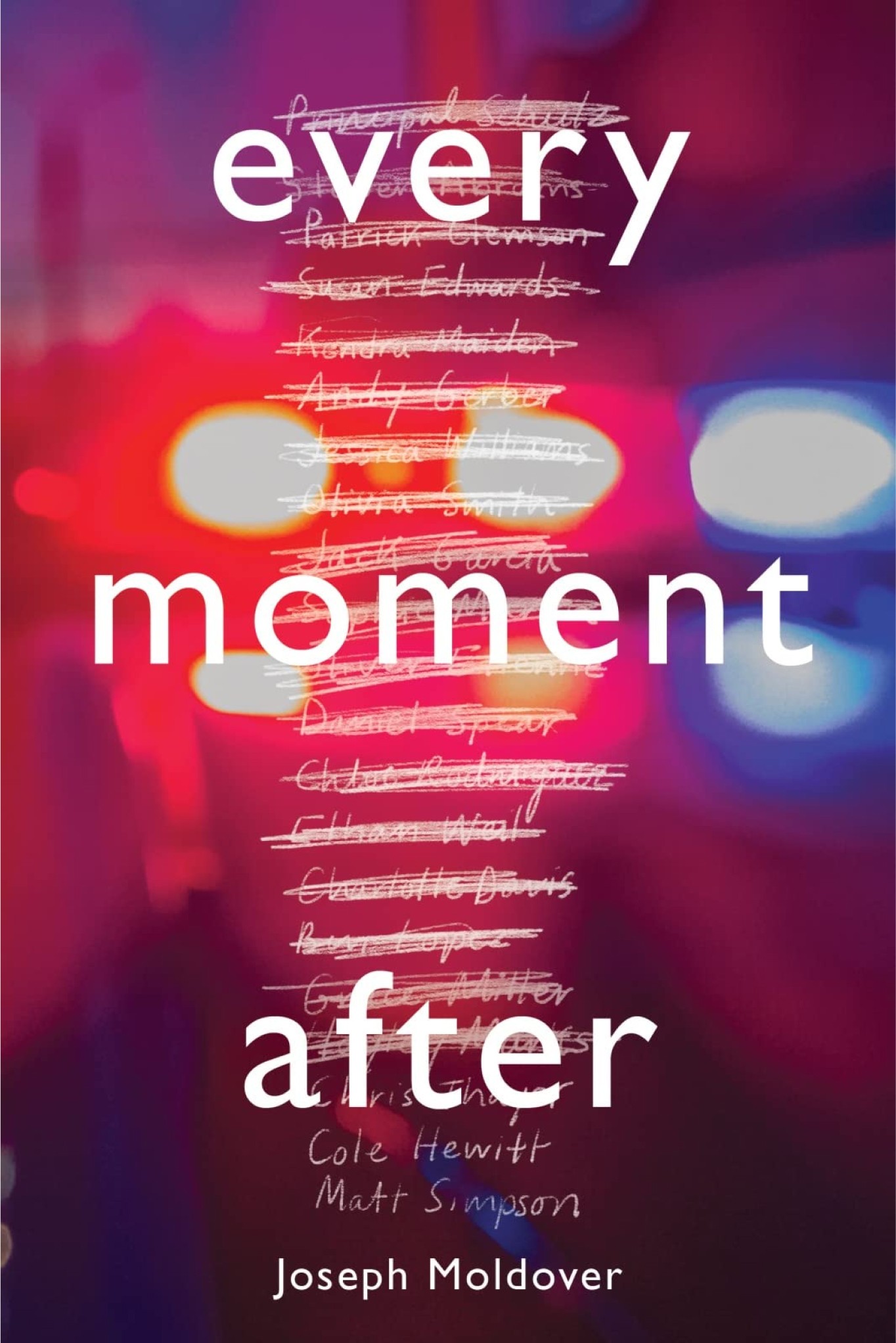
I’m proud to share with you Joseph Moldover’s moving YA debut Every Moment After.
Eleven years after a shooting in their classroom stunned the nation, the former first graders of East Ridge Elementary School have reached the day of their high school graduation. Faced with a simple tribute of eighteen black-draped chairs, Matt Simpson and Cole Hewitt, best friends and fellow survivors, must decide how to face this moment and the long summer beyond.
Matt was the boy who wasn’t there. He called out sick, and now, years later, the repressed guilt over his absence is finally starting to rise to the surface. After pushing his limits while swimming across the lake one night, Matt starts taking bigger and bigger risks, looking to finally find out if one of those black-draped chairs should have belonged to him.
Cole was the boy in the picture. One of only seven children to emerge alive from the classroom, he was photographed being carried away in a police officer’s arms. An immediately iconic image, it burned itself into the national consciousness. Since then, all he’s wanted to do is fly under the radar. He deferred his college admission to stay home and care for his widowed mother, but after watching all of his classmates prepare to leave, Cole decides to do the last thing anyone expects of him: to show the girl he’s loved from afar how he feels with one big, crazy, romantic gesture. To do it right, he’ll need Matt’s help.
Every Moment After is not really the story of a shooting or of a shooter; it’s the story of what comes next, the path to healing. It is a story of the long reach of loss, and of the power friendship has to break free from it.
Joseph Moldover holds a doctorate in clinical psychology, is board certified in clinical neuropsychology, and runs a small group practice in Wellesley, MA where he specializes in developmental and learning disorders such as Autism, Dyslexia, ADHD, and Intellectual Disability. He has published nonfiction for general audiences as well as several works of short fiction, including in One Teen Story, and The MacGuffin. Most of his fiction has appeared under the pseudonym, Joseph Sloan, a reference to his grandfather, the late novelist Sloan Wilson, author of the bestselling 1955 novel The Man in the Gray Flannel Suit.
East Ridge is a town I won’t soon forget, a town whose monuments grow up, join the baseball team, write poetry, and get in trouble, kids tired of being symbols, trying to define their own stories. It's a town living with a lingering shadow and the moments of beauty that stand out in stark relief from it. I hope you are as moved as I was by Every Moment After and I look forward to hearing from you.
Best,
Adam Schear
Strategic Objective: Bridge historical biography and literary thriller, demonstrating the manuscript's modern relevance by emphasizing the timeless tension between state censorship and artistic freedom.
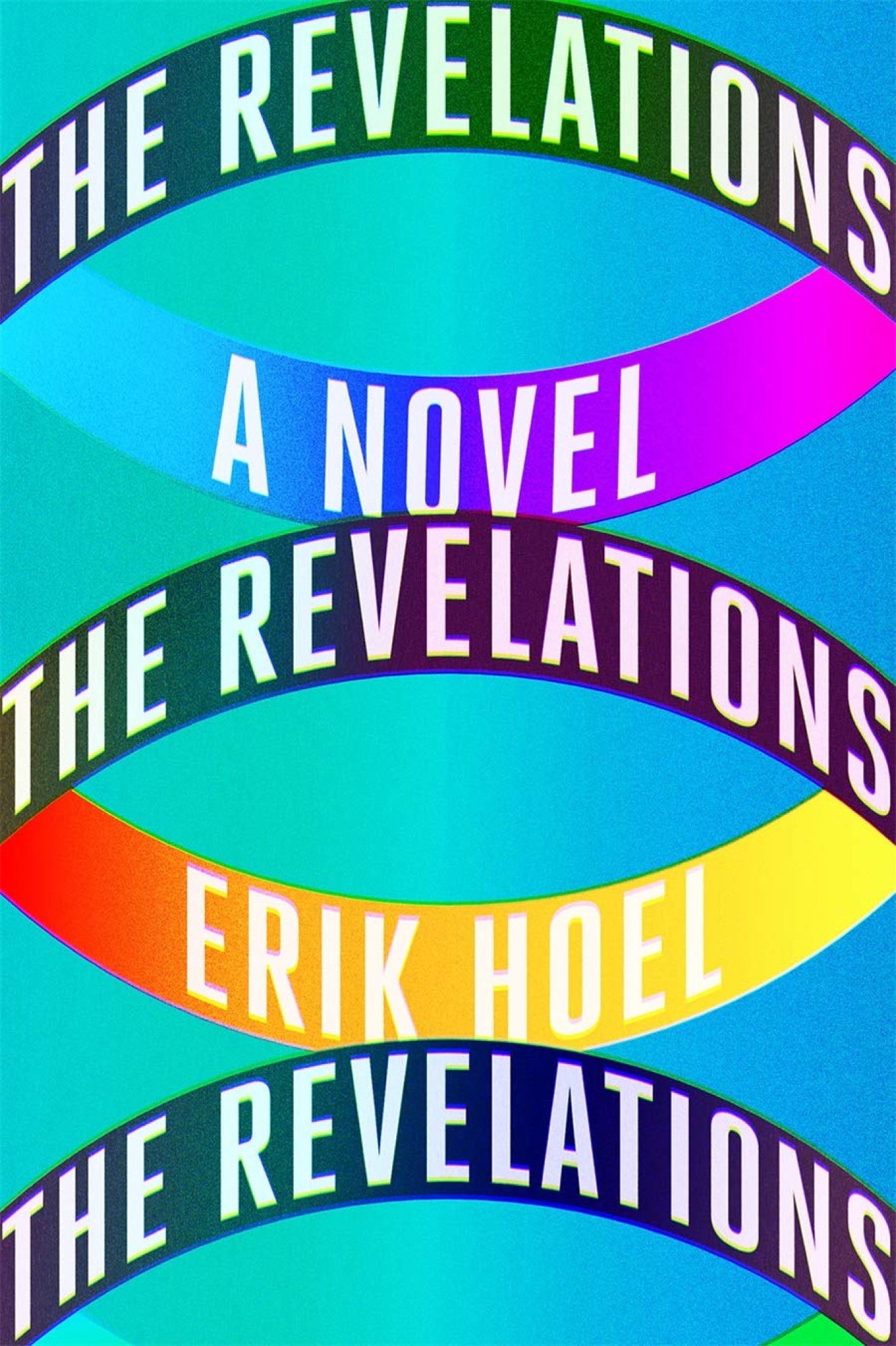
I’m thrilled to share with you Mikhail and Margarita, a debut novel loosely inspired by the life of Mikhail Bulgakov, by Julie Lekstrom Himes.
In the 1930s Bulgakov was one of Stalin’s favorite writers. But with fame came scrutiny, and in the face of crushing censorship, he was inspired to write his masterpiece, a dangerous and wickedly satirical novel: The Master and Margarita. After the censors blocked it from being published, Bulgakov burned the only copy, eventually re-writing it from memory. It was passed around in secret until it was finally published 26 years after his death and went on to become an international sensation. The character of the Master is clearly a stand in for Bulgakov himself, but who inspired the character of Margarita? And who was his model for such a complex take on the devil? These are the questions that animate Himes’ Mikhail and Margarita.
In 1933, Mikhail finds himself in a precarious state. His career is on the brink of being dismantled, his friend and mentor, the poet Osip Mandelstam, faces arrest and torture, and a mysterious agent of the secret police seems to have a growing obsession with exposing Mikhail as an enemy of the state. Through it all, he finds himself falling in love with Osip’s mistress, a strong and idealistic woman who is always willing to speak out. While she attends dissident meetings, he tries to curry favor from within the political system while simultaneously retreating to his apartment to write his novel in private. But in a city where no secret is safe, the most dangerous thing in his life could be the pages tucked away in his desk drawer. Ranging between lively readings in the homes of Moscow’s literary elite, to the horrors of the Siberian Gulag, Himes paints a sweeping portrait of a country with a towering literary tradition confronting a dictatorship that does not tolerate dissent.
Occupying a space somewhere between Z: A Novel of Zelda Fitzgerald, Mrs. Poe, and the German film The Lives of Others, Mikhail and Margarita is a window into the life of one of the 20th century’s most beloved novelists, as well as a gripping story of deception, espionage, and the indestructible power of great art in the face of monumental oppression. I hope you are taken with it as much as I am.
Best,
Adam